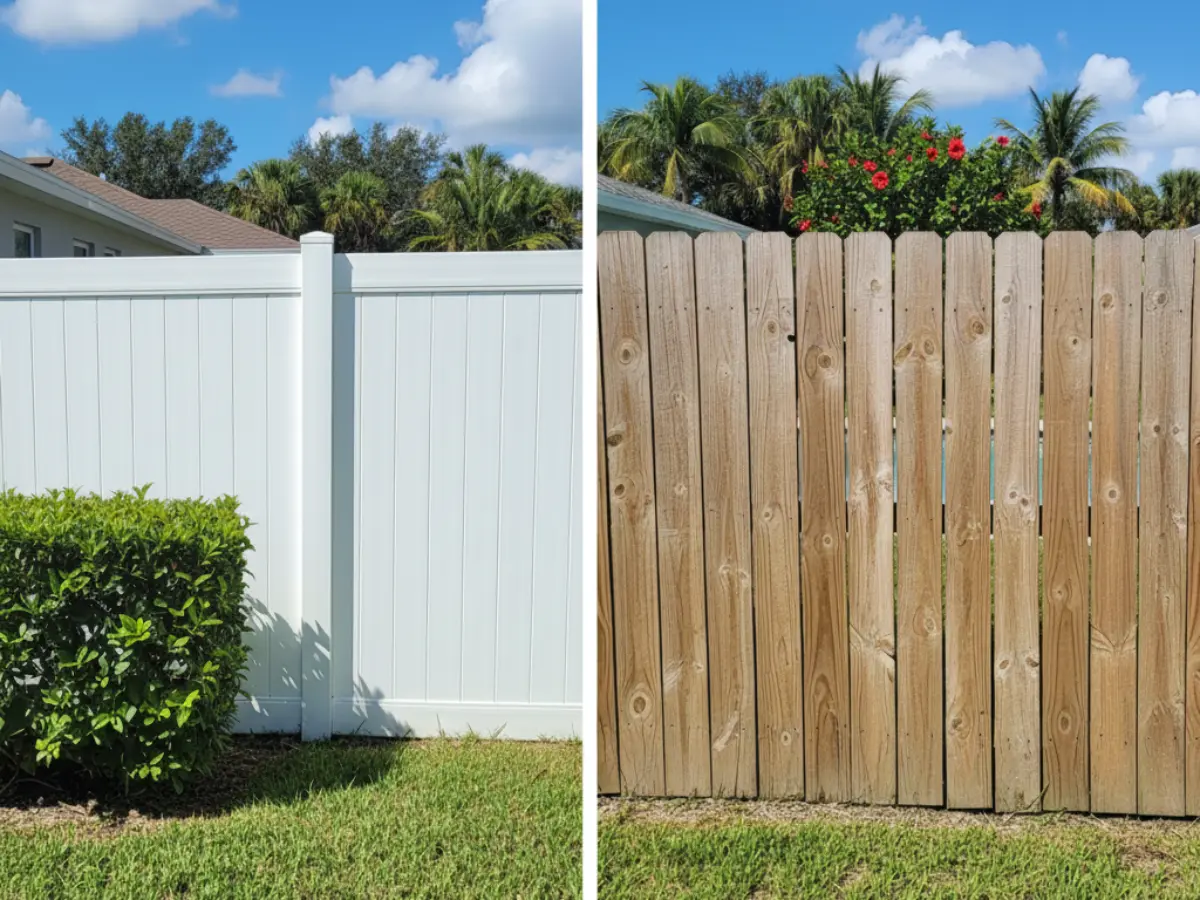
Selecting the best privacy fence is a significant concern for any homeowner in Florida, and because this state has a particularly unique climate, you’ll want to consider your fencing options carefully. With intense sun, high humidity, heavy rain, and seasonal storms, not every type of fencing material is built to endure Florida’s environment over time.
Vinyl or Wood: Which is Best for Your Property?
Both materials have their benefits, but which is the better choice for your home? In this guide, we’ll compare vinyl vs. wood privacy fencing and break down their pros, cons, costs, and upkeep specifically for Florida’s hot, humid conditions.
The Importance of Privacy Fencing for Your Home
Privacy fences do more than block the view. They provide security, define property boundaries, and create a safe space for pets and children. They also help reduce outside noise and can improve your home’s curb appeal.
Choosing the right material not only ensures long-lasting performance but also saves you time and stress on maintenance in the long run.
Vinyl vs. Wood Privacy Fences: A Quick Comparison
At first glance, a wood fence might seem like a more affordable option than vinyl. But vinyl fences are among the most durable, low-maintenance, and weather-resistant choices available. Wood fences offer a natural look and more design flexibility but demand more care especially in Florida’s climate. Understanding these differences now can save you time, money, and frustration later.
Vinyl Privacy Fences: Pros and Cons
Vinyl fencing is a top choice for Florida homeowners.
- The biggest benefit? It’s low-maintenance. Unlike wood, vinyl doesn’t need painting, staining, or sealing. Just rinse it occasionally and it stays looking new.
- Vinyl also performs extremely well in Florida’s weather. It resists moisture, humidity, rot, termites, and UV damage making it ideal for homes that get a lot of sun and rain.
- Another major advantage: longevity. Quality vinyl fences can last 20–30 years or more without warping or cracking.
However, vinyl isn’t perfect. The upfront cost is usually higher than wood. Color choices are more limited, and installation must be done correctly to ensure stability during high winds and storms.
Wood Privacy Fences: Traditional Style with Extra Upkeep
Wood fencing remains a favorite for those who love a traditional, natural look. It blends well with landscaping and offers a warm, timeless aesthetic.
- It’s also highly customizable paint it, stain it, or cut it into nearly any style you like to match your home’s design.
- Wood’s lower initial cost is another plus, making it attractive for homeowners on a tighter budget.
But in Florida’s climate, wood fences are more vulnerable to issues. Humidity, rain, and pests can cause rot, mold, termites, warping, and fading. You’ll need to stain, seal, and repair wood regularly. Its average lifespan is about 10-15 years in Florida much shorter than vinyl.
Florida’s Weather Impact: Vinyl vs. Wood
Florida’s weather is a big factor in fence durability.
- In rainy, humid conditions, vinyl wins it’s waterproof and rot-resistant. Wood, on the other hand, absorbs moisture and breaks down over time.
- Under constant sun, UV-protected vinyl resists fading. Wood is more likely to crack, dry out, and lose its color.
- When hurricanes or strong storms hit, properly installed vinyl panels maintain their structure better. Wood fences can become loose or break if not well-maintained.
Maintenance Expectations Over Time
Vinyl fencing is easy to care for. Occasional rinsing is all it needs is painting, sealing, or pest treatments required.
Wood fencing needs more attention. Annual sealing or staining, termite protection, and frequent repairs for damage like rot or warping are all part of the routine. If convenience matters, vinyl is the better long-term choice.
Cost Breakdown: Short-Term vs. Long-Term Value
Initially, wood fences cost less to install. But when you factor in regular maintenance, repairs, and potential replacements, vinyl often ends up being more economical over time. Vinyl fencing rarely needs replacement and holds its appearance for decades. Wood fencing, while cheaper upfront, can become a long-term expense if not properly maintained.
Which Privacy Fence Is Right for Your Home?
Choose Vinyl If:
- You want a long-lasting, low-maintenance fence
- You live in a coastal or humid area
- You prefer a clean and modern design
- You want to avoid ongoing maintenance costs
Choose Wood If:
- You love the look of natural materials
- You want the ability to customize color/style
- You are willing to keep up with regular maintenance
- You have a lower upfront budget
Expert Insight from AJ Fence Manufacturing
With years of experience helping Florida homeowners, AJ Fence Manufacturing typically recommends vinyl privacy fencing for residential properties. It’s weather-resistant, low-maintenance, and built to last in Florida’s demanding environment.
Across the state, more Florida homeowners are opting for vinyl fencing because it stands up better to humidity, requires less maintenance, holds up well during storms, and looks great all year round.
Final Verdict
For most homes in Florida, vinyl privacy fencing is the better overall choice. It offers greater durability, less upkeep, and better long-term value. Wood still has its place for homeowners who prioritize a rustic or natural appearance, but it comes with added responsibilities. Ultimately, your decision depends on your personal preferences, budget, and how much maintenance you’re willing to take on but in Florida, vinyl offers peace of mind that lasts.